

Until recently, I had heard very little about digital medium format photography. I can remember the 6×6 slides a friend of mine had shown me in the 1970s. I can also recollect that they were astoundingly good. And that’s about it. Of course, I have seen the pictures of photographers using such analog cameras as well. Vivian Maier and her Rolleiflex to begin with. But digital medium format photography wasn’t on my agenda until I joined the OI Paris photo club and bumped into a fellow photographer who indulged in wielding such a camera and told me about it.
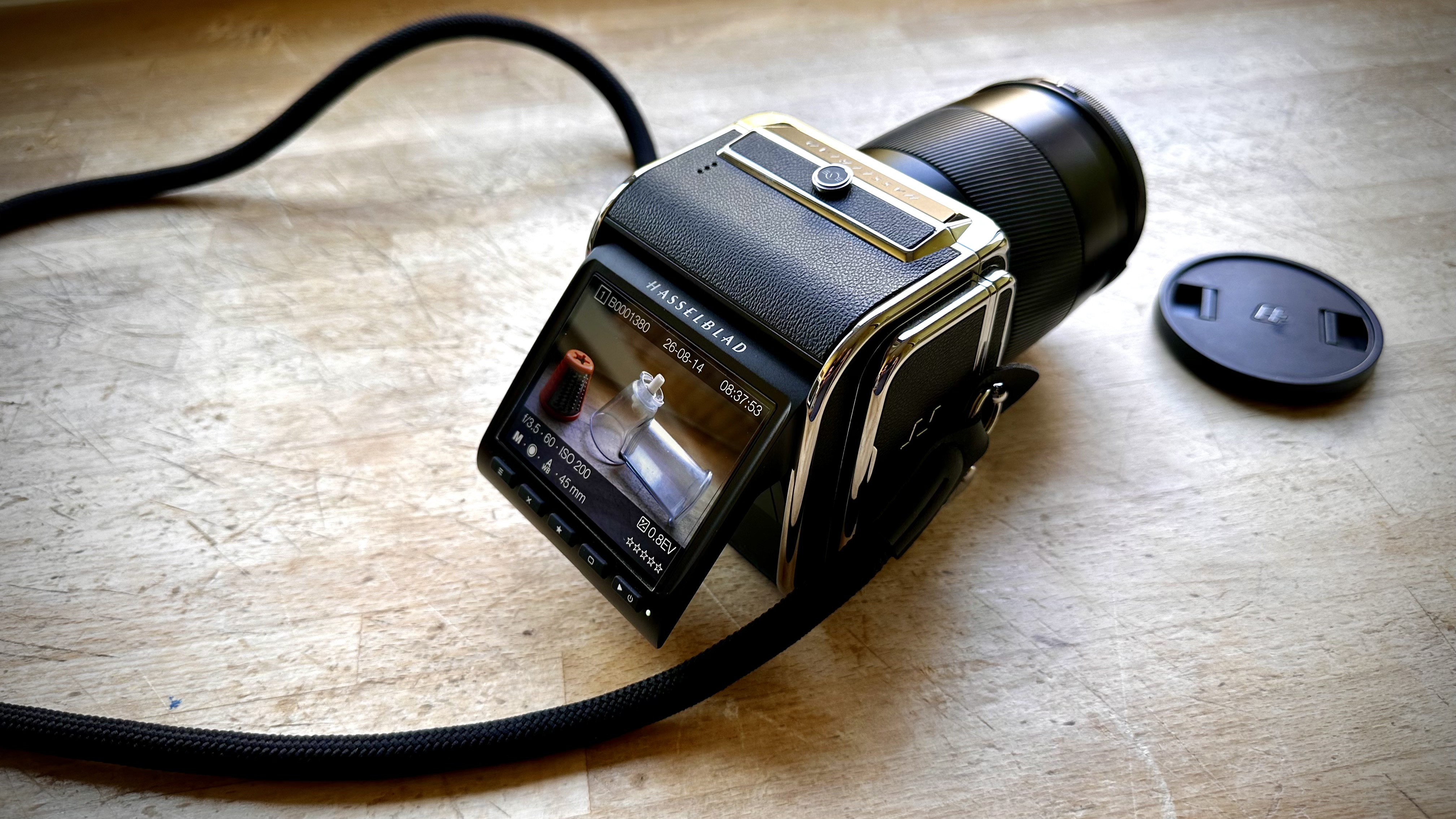
Recently, I purchased a second-hand Hasselblad 500C camera. It led to the purchase of a second-hand Hasselblad CFV II 50C digital back and 907X package. This in turn led to an XCD 45 add-in. And then, I started to understand what digital medium format photography was about. Since then I have wanted to know more, and I found the result so amazing. Here is the account of my experience with that digital format, with examples taken these past few weeks.
About Digital Medium Format Photography
TL;DR
- After years shooting full frame, I picked up a second-hand Hasselblad 500C plus a CFV II 50C digital back and 907X body, bought piece by piece around the Bièvres photo festival and an online dealer in Finland.
- The colour rendering, sharpness and dynamic range are a clear step up from full frame. Besides, I need far less post-production to get there.
- Medium format sensors run roughly 1.7 times the area of full frame. The CFV II 50C’s 50 megapixels trade a little resolution for smaller files and a lower price than the 100-megapixel CFV 100C back.
- The trade-offs are real. Files over 100MB, slower autofocus, no built-in viewfinder, and a serious price tag. Hence it complements my Nikon kit rather than replaces it.
- Below are my field impressions, what “medium format” actually means, a breakdown of the 907X and XCD 45mm lens. I have also added a few video reviews, infographics and further reading.
In This Article
- My First Impressions With Digital Medium Format Photography
- What are the limitations of digital medium formal photography?
- What does “Medium Format” Actually Mean?
- The Hasselblad 907X + CFV II 50C
- Why Larger Sensors Enhance Digital Medium Format Images
- The XCD 45mm Lens
- Tradeoffs Versus Traditional Full Frame Cameras
- 3 Video Reviews of the 907X / CFV II 50C
- 3 Best Infographics
- References
Medium Format?
Until recently, “medium format” didn’t mean much to me. I’d used almost any kind of camera but not any of those top of the range implements. Of course, I had heard of the celebrated and mythical Hasselblad camera and its Zeiss Planar companion, one that is said to have taken pictures on the moon. As it happens, reality is somewhat different from fiction. Searching with Perplexity, I found out that “on Apollo 11, a second Hasselblad Electric Camera (HEC) fitted with a Zeiss Planar 80 mm f/2.8 lens was used to photograph from inside the Eagle lunar module.”[1][2] Another lens was used for the pictures taken outdoors, but I don’t think it matters much.
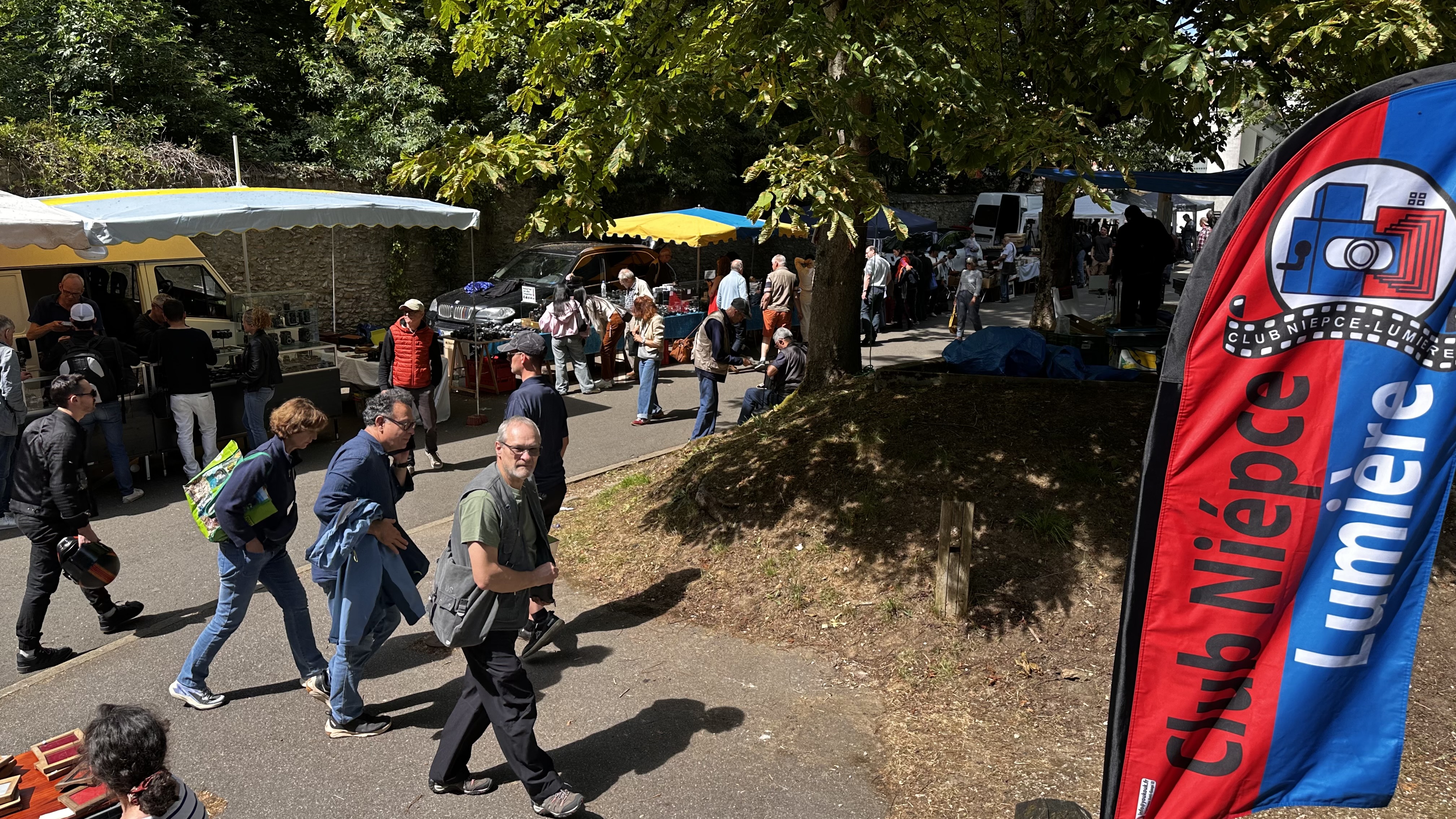
Anyway, I went to the international photo festival in Bièvres, an annual early-June weekend fair that has drawn collectors, dealers and enthusiasts from across Europe since 1964. The festival is a large market in vintage and new photographic equipment, plus exhibitions, conferences and contests.
Back to the Future of 1966 in 2026
Every year or so, I go there with a particular objective in mind. Once it was a second-hand Manfrotto tripod which I bought from an Italian merchant, once a Tamron super wide-angle lens from a dealer in Orléans, another time a very sturdy tripod for my strobes bought from another merchant. This time, my quest was directed towards a vintage Hasselblad camera. To this end, I was accompanied by my friend Christian from the OI-Paris photo club, who is a seasoned photographer with decades of use of a 500C/M Hasselblad camera.
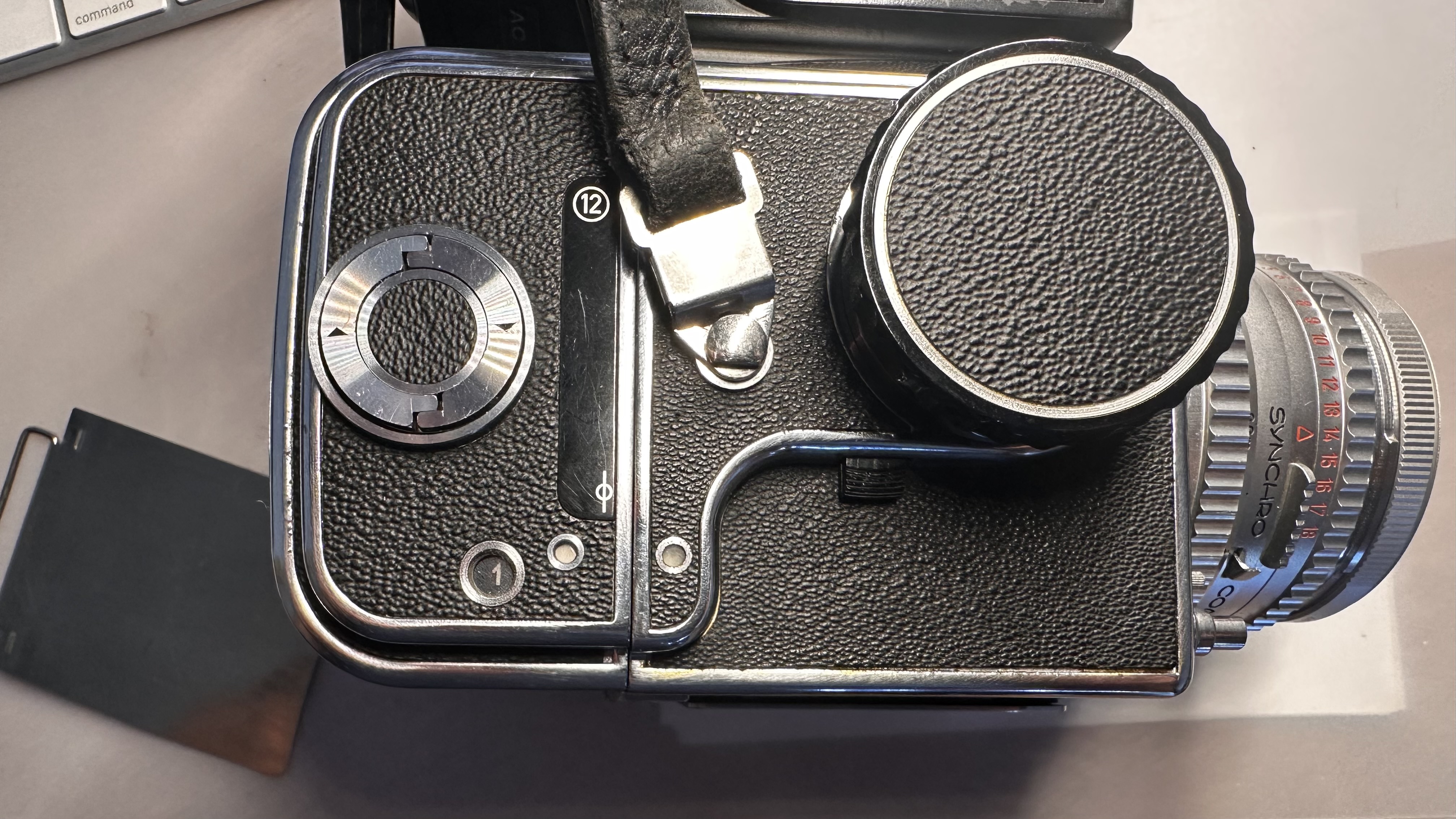
And I almost immediately found the beauty I was searching for, a pristine 500C from 1966 complete with its electronic cell and a 12-view film back. From then on, I searched for a digital back and I found a reasonably priced second-hand package on the Kamera Store website in Finland, and the X lens to go with it.
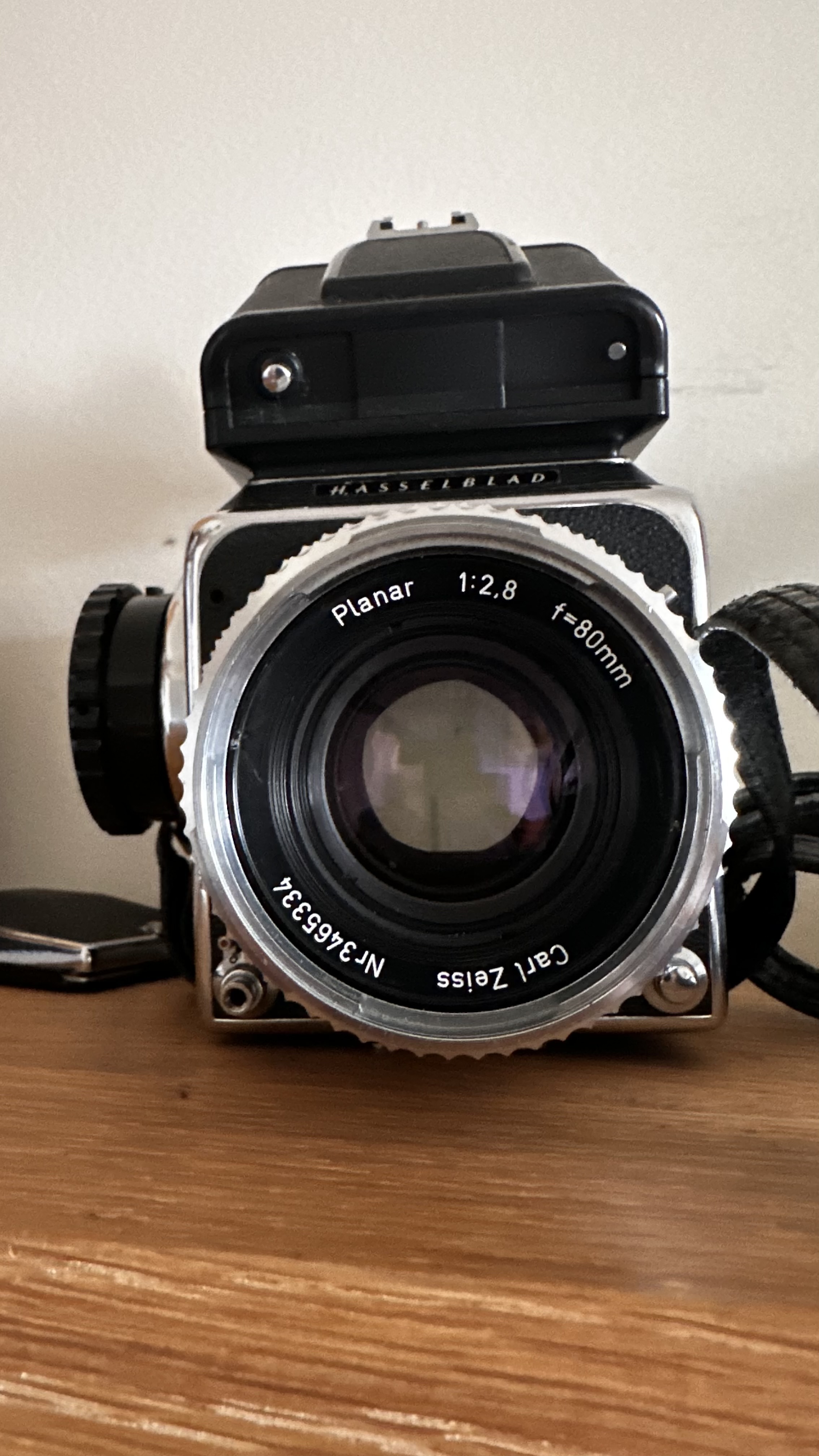
As a result, I own two medium format cameras. One is the 500C film camera (on which the digital back can be fitted, I’ll get back to this in a moment) and one is the 907X + CFV II 50C (50 MP) digital camera. Since then, I have been able to experiment with both. I started with the digital medium format camera and was astounded with the results. Here are my impressions after a number of tests, and I took this opportunity to build a little primer to substantiate my findings with hard facts and numbers.
First Impressions With Digital Medium Format Photography
Before I buried my head in the technical details, I went out into the field to try my brand-new camera. I must admit that I was a bit sceptical at first. I wasn’t quite sure the results would be that compelling. What I saw changed my mind on the subject entirely.
- What struck me most at first was the colour rendering. The colours were lively and faithful. Besides, I realised that I didn’t need to do as much post-production on my photos, and that the result was great even without it.
- Great detail and incredible sharpness. As shown in the example below, I can zoom into a picture and still get some detail at the very far end of my view. It’s incredibly sharp and detailed, and the atmosphere conveyed by the lifelike rendering is extremely pleasant.
- Great rendering even in the most god-awful midday sun. I started with a shooting of the roadworks around Denfert-Rochereau in Paris around noon, probably the worst time for photography ever. Usually, I opt for black and white photography to counterbalance that. With this trick, I can do away with washed-out colours and turn my pictures into a play between brightly lit areas and shadowy patches. I decided to keep the colours on my pictures, the rendering of which was superior to the monochrome one.
- Depth of field. I have also noticed that the bokeh is quite smooth and pleasant, even though the lens maximum aperture is f/3.5, which isn’t much on paper but is way sufficient.
- Battery life. The battery life isn’t stated as incredible in the reviews, but I can guarantee that it is, and you barely need to charge it in between outings.
A few digital medium format photography examples


My Cameras
As a result, I am no longer sceptical about digital medium format photography, and the 907X + CFV II 50C now sits proudly on my shelf.

Some Limitations
The downside is the file size, which comes at 100MB on average, versus 30MB for compressed raw images on the Nikon Z9. There was to be a price to pay for superior quality. I’m glad I purchased the CFV II 50C (50MP) digital back rather than the 100C. 100MP would be over the top, and each file would weigh around 200 MB. As a consequence, I’m even more aggressive in my culling of initial shots. As the saying goes, “each photo one deletes is bound to dodge criticism.”
Now that I’ve performed my tests, I wanted to understand more precisely how that miracle had occurred.
What “Medium Format” Actually Means
I searched the internet with the help of my favourite AI-driven search engines. Here is what I found, edited and enhanced with my comments. The results of the search I include below as block quotes.
“Medium format is a sensor or film size category that sits between the classic 35mm ‘full frame’ standard (24x36mm) and the much larger sheets used in large-format view cameras. Historically, medium format referred to any film size larger than 24x36mm and smaller than roughly 90x120mm, and it was shot on 120 film, producing frame sizes from 56x56mm square up to panoramic 56x168mm formats.”
This is indeed what I do with my 500C, I buy Fomapan 120 films in black and white. They are made in Europe and are good value for money. One must bear in mind that film photography is an expensive hobby these days.
“Today, digital medium format cameras from Fujifilm and Hasselblad use sensors around 43.8×32.9mm, a size roughly 1.7 times the surface area of full frame. Phase One pushes further still, to about 53.4x40mm, which is closer to 2.5 times full frame’s area.”
Phase One cameras are, as far as I am concerned, completely out of bounds. They cost dozens of thousands of euros each. The second-hand CFV II 50C was a good compromise. I bought it as a package with the 907X from Kamera Store in Finland for “only” €5,000. The lens was bought second-hand too and cost me another €1,000. That’s a lot of money, but I see it as an investment rather than mere spending.
For a broader grounding in how these categories are defined, see the Wikipedia entry on image sensor format and MPB’s Camera Sensor Size Formats Explained guide.
The Hasselblad 907X + CFV II 50C
Now, here is what I found about my set up.
“The 907X is a modular medium format body, a minimalist, viewfinder-less ‘chassis’ that takes interchangeable digital backs, the most accessible of which is the CFV II 50C, a 43.8×32.9mm sensor delivering 50 megapixels. That sensor area is the same roughly 1.7x-full-frame figure noted above, even though its resolution is lower than the newer 100-megapixel CFV 100C back. The combination is built around Hasselblad’s V-series heritage, styled after the classic 500-series film cameras, with a clean, boxy aluminum body finished in leather. Reviewers consistently single out the design (Digital Camera World’s review and Steve Huff’s review both call it one of the most beautiful cameras ever made), while DPReview’s hands-on covers the mechanics of the modular back-and-body system in more depth.”
A Beautiful Medium Format Digital Photography Camera
I confirm this is not only a beautiful camera, it’s also really fun to play with. I purchased a designer “rope camera strap.” The shooting is unusual, a bit similar to that on the old 500C, as you can shoot from above.
As explained above, I could fit the digital back on the old 500C and carry out a few tests. There are two ways one can use the CFV II 50C on top of the 500C.
- The simplest way is to attach the back to the vintage 500C and use the mechanical shutter that is built into the Planar 80mm f/2.8. Doing so imposed the use of a tripod and a remote trigger.
- A more sophisticated way of using the digital back with the vintage 500C camera is to block the shutter of the 500C in B (bulb) position, thanks to the dedicated lever, and switch the digital back to electronic shutter mode. This way, you may take pictures without a tripod and get good results.
I performed all these tests and came to the conclusion that it was best to use the 500C with film only, and when opting for digital, use the 907X + CFV II 50C. I couldn’t see any advantage in using the digital back on a film camera, because the 45mm Hasselblad lens is exceptionally crisp and beats the Planar hands down.
And now here are the technical explanations for what I described above in my field experiments.
Why Larger Sensors Enhance Digital Medium Format Images
- Depth of field. At the same aperture and framing, a larger sensor produces shallower depth of field than a smaller one. Subjects separate from backgrounds with a softer, more three-dimensional falloff.
- Tonal rendering. The 50C’s individual pixels are physically larger than those on a 100-megapixel sensor of the same size, so each one gathers more light. That tends to translate into excellent dynamic range and smooth, film-like gradation across skies, skin tones, and shadow detail.
- Resolution and file size. 50 megapixels is still plenty for large prints, and it comes with smaller files and faster processing than the 100-megapixel back, at a lower price point.
These characteristics are echoed across independent reviews, including Fstoppers’ review of the 907X 50C and Photography Blog’s review, which both note the exceptional colour depth and dynamic range once paired with a sharp XCD lens.
The XCD 45mm Lens
The XCD 45mm is a moderate wide-angle lens, roughly equivalent to a 36mm field of view in full-frame terms. That makes it well suited to environmental portraits, interiors, and street photography, where the surrounding context matters as much as the subject. Two versions exist, the original XCD 45mm f/3.5, a solidly built lens weighing 417g, and the newer XCD 45P f/4, marketed as the smallest and lightest autofocus medium format lens on the market at just 320g and 47mm long. Both use a leaf shutter, which allows flash sync at any shutter speed, and both pair naturally with the slim 907X body. For detailed optical breakdowns, see Vieri Bottazzini’s in-depth review of the f/3.5 version and Fstoppers’ review of the 45P, along with DPReview’s announcement coverage of the 45P’s launch.
Tradeoffs Versus Traditional Full Frame Cameras
There are more tradeoffs for digital medium format photography than just file size. Here they are.
- Cost. Medium format bodies, backs, and lenses carry a significant premium over full-frame systems.
- Autofocus speed. The focus speed is considerably slower than modern full-frame mirrorless autofocus cameras like my Nikon Z series and even my D850. In a way, it doesn’t matter; this camera was made for deliberate, composed shooting rather than fast action or sports. As it happens, it is a very good complement to my Nikon Z7-Z9 and D850 lineup rather than a replacement.
- Handling. The 907X is most balanced with compact XCD lenses like the 45mm; larger, heavier lenses make the small body feel front-heavy.
- Separate viewfinder. There is no viewfinder on the original product, which can make picture taking in bright light rather awkward. You will need to spend an extra €400 on a separate viewfinder.
- No flash hotshoe. I researched the subject, and it seems you can get things to work with various implements (cold shoe, wires and so on), but all that sounds very complicated compared to using the D850 and even the Z9 in the studio.
The good news is that the 50C specifically trades resolution for smaller files, faster workflow, and typically a lower price than the 100-megapixel CFV 100C back, making it a practical middle ground within the medium format lineup itself. See Fstoppers’ comparison of the X2D and 907X for how the 907X positions itself against Hasselblad’s integrated body.
Video Reviews of the 907X / CFV II 50C
- Hasselblad 907X Review | I’m in LOVE with this camera! (a hands-on, first-impressions style review covering handling, image quality, and why the 907X wins reviewers over despite its limitations)
- Is the Hasselblad 907X Worth the Money? | Long Term Review (a long-term ownership review addressing value, workflow, and whether the system holds up after extended real-world use)
- Hasselblad 907X 50C Review: 3 Years Later? Not Buying The CFV 100c (a retrospective from a longtime 50C owner explaining why they’re sticking with the 50-megapixel back over upgrading to the 100C)
3 Useful Infographics
- PhotoRule Camera Sensor Size Comparison Tool (an interactive, to-scale visual comparison of full frame, APS-C, Micro Four Thirds, 1-inch, phone, and medium format sensors)
- Paul Kothe’s Sensor Size Comparison (a visual chart with a built-in crop-factor and equivalent-focal-length calculator spanning full frame through medium format)
- SheClicks: Understanding Camera Sensor Sizes (a clear, beginner-friendly graphic laying out relative sensor sizes and what they mean in practice)
References
- Image sensor format, Wikipedia
- Photography 101: Camera Sensor Size Formats Explained, MPB
- Hasselblad 907X 50C Review, Digital Camera World
- The Hasselblad 907X 50C Review, Steve Huff Hi-Fi and Photo
- Hands-on with the Hasselblad CFV II 50C and 907X, DPReview
- A Review of the Hasselblad 907X 50C Medium Format Camera, Fstoppers
- Hasselblad 907X 50C Review, Photography Blog
- Hasselblad XCD 45mm f/3.5 In-Depth Review, Vieri Bottazzini
- Fstoppers Reviews the Hasselblad XCD 45mm f/4 P
- Hasselblad claims its new XCD 45mm F4 is world’s smallest, lightest AF medium format lens, DPReview
- Hasselblad X2D vs. 907X: Which Medium Format Camera Fits Your Style?, Fstoppers

------------
Je suis photographe et aquarelliste. Je pratique la photographie depuis l'enfance et la photographie numérique depuis 1995. J'en ai fait mon activité principale en 2021. Je possède un studio photo dans le 15e arrondissement de Paris
- A Man Tired of London… - October 6, 2026
- The Resilience of Amiens Cathedral Through History - September 8, 2026
- Winter at place des Vosges - September 7, 2026


